


THE FLAG THAT MARKETS PRICE EVERY DAY
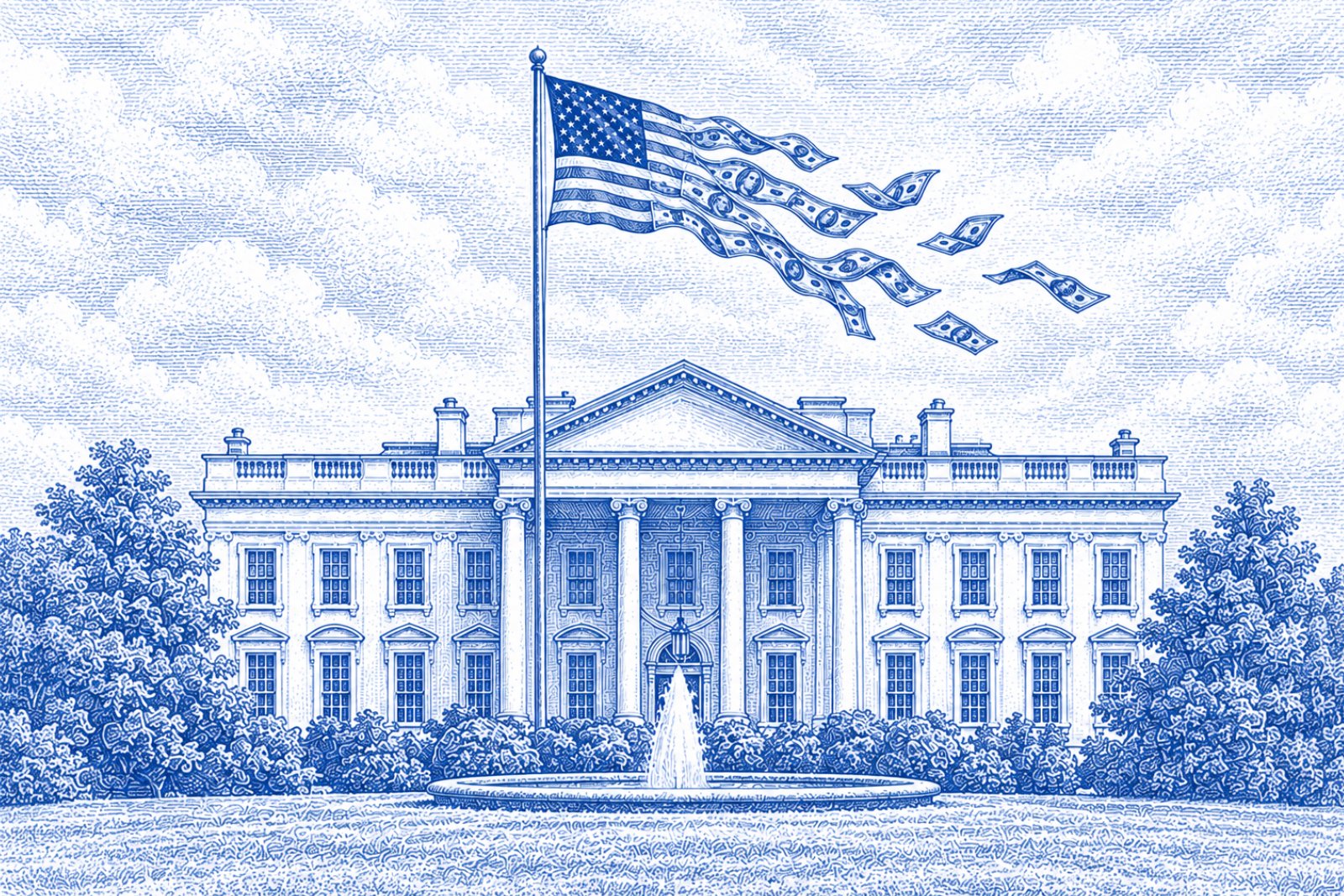
What is a national flag actually worth? Nobody asks the question seriously, because nobody expects a sensible answer back. A flag hangs outside an embassy, folds into a soldier’s coffin, flies at half-mast the morning after a disaster, and is run up a pole at the opening ceremony of a games that will not return to that city for another century. At no point in any of this does anyone quote a price for it, bid against a rival buyer for it, or mark its value up or down between one morning and the next. A flag simply means whatever its country has decided it means, and that meaning does not move with the weather, the news cycle, or the mood of a bond desk three time zones away.
Its own country’s banknote carries many of the same signals, often the same colours, sometimes a portrait in the same corner the crest occupies on the flag beside it, and yet the note is priced, continuously, in a market that never fully closes anywhere in the world, by strangers who could not find that country on an unlabelled map and feel nothing whatsoever about its flag. The Bank for International Settlements put global average daily turnover in that market at nine point six trillion dollars in its most recent triennial survey, a figure higher than it has recorded in any survey since it began keeping score in 1986, and every one of those dollars represents somebody, somewhere, deciding afresh what a given currency is worth that minute. A flag is a symbol that nobody is obliged to transact in. A currency is the single national emblem a state cannot keep off the market even if it wanted to: somebody, somewhere, is quoting a price for it this very minute, whether the government whose face sits on the note approves of that price or not.
In February 2024 the Bank of England confirmed that new banknotes bearing the portrait of King Charles the Third would enter circulation on 5 June that year, the first change to the monarch’s image on sterling notes since Elizabeth the Second’s own portrait first appeared in 1960. All four denominations changed face together, the five, the ten, the twenty and the fifty pound note, each one keeping its existing reverse design, its existing colours, its existing size, with only the portrait and a small cameo in the security window actually new. Notes carrying the old portrait remained legal tender throughout, circulating alongside the new ones rather than being withdrawn, and the public were given a short window, in person until 11 June and by post until the end of that month, to exchange any old notes they preferred not to keep. Andrew Bailey, the Bank’s governor, marked the occasion in the Bank’s own statement: “This is a historic moment, as it’s the first time we’ve changed the sovereign on our notes.”
None of this moved a single market anywhere. Sterling’s exchange rate against the dollar on 5 June 2024 traded within its ordinary daily range, gilts priced exactly as they had the week before, and no trading desk anywhere adjusted a single position because the portrait on a five pound note had changed. A currency’s price answers to confidence in the institution standing behind it, to inflation expectations, to interest rate differentials, to the fiscal position of the government that taxes and spends in it: questions a change of portrait does not touch even slightly.
Fifteen years earlier, a government faced the identical choice of what to put on a banknote and arrived at an entirely different outcome. Zimbabwe’s own currency carried the national coat of arms and the other familiar emblems of sovereignty that had anchored its design since independence in 1980, and none of that symbolism weakened by so much as a shade of ink as the surrounding economy collapsed around it. Monthly inflation peaked in the middle of November 2008 at a rate the economist Steve Hanke’s own hyperinflation index puts at roughly seventy-nine point six billion per cent, the second-highest monthly rate ever recorded anywhere, behind only Hungary’s in 1946, with the year-on-year figure running to something close to ninety sextillion per cent, a number with so many zeros that stating it any more precisely serves no purpose a reader could actually use. By that same month a single American dollar bought something over two point six billion Zimbabwean dollars at the official rate alone, itself already a fiction overtaken daily by whatever rate the street was actually using. The real economy underneath those figures had been shrinking for most of the preceding decade: food production fell by roughly forty-five per cent between 1999 and 2009, manufacturing output dropped by more than a quarter in 2007 alone, and unemployment reached somewhere close to eighty per cent, the arithmetic a currency’s printing press cannot outrun no matter how many zeros it adds to the next note.
By January 2009 the Reserve Bank of Zimbabwe was issuing a note with a hundred trillion printed on its face, introduced on the sixteenth of that month and worth, on the very first day it left the printing press, somewhere around thirty American dollars. The coat of arms sat in exactly the same place it always had. The guilloche patterns, the serial number, the watermark, the signature of the bank’s own governor, every visible mark of state authority that a banknote is designed to carry, remained fully intact and perfectly printed throughout. The arithmetic underneath those marks had stopped working long before the ink did, and no amount of correct printing could repair that on its own. The government itself gave up first: foreign currencies had already been tolerated informally for months, and on 12 April 2009 Zimbabwe suspended its own dollar entirely, printing nothing further and leaving the Reserve Bank’s own note, coat of arms and all, worth precisely whatever a collector would later pay for it as a curiosity.
Another fifteen years earlier again, Yugoslavia had already run the identical experiment to its own final conclusion. The dinar entered its hyperinflation in January 1992 and did not emerge from it for twenty-four months, a run exceeded in length by only one other currency collapse in recorded history. The government redenominated the currency three separate times along the way, stripping zeros from the face of the note each time while the collapse underneath it went on driving itself unaddressed, most recently on 29 December 1993, when nine zeros vanished from every note in circulation at a single stroke.
Monthly inflation peaked the following month, in January 1994, at an official rate of three hundred and thirteen million per cent, the third-highest monthly figure ever recorded anywhere, after Hungary’s 1946 collapse and the even steeper Zimbabwean rate the world would see roughly fifteen years afterward. A five-hundred-billion-dinar note had gone to press on 23 December 1993 worth a little over four German marks on the day it was printed, and lost a visible share of even that modest value before it had finished being distributed to the banks meant to issue it. On 6 January 1994 the government did what Zimbabwe’s would do fifteen years afterward. It stopped defending its own currency’s exclusive claim to the national economy, and declared the German mark legal tender for every tax payment and financial transaction the state itself was party to. The dinar kept its coat of arms, its portraits, its promises printed in the proper official typeface, right through to the day the state that issued it stopped insisting anyone actually use it for anything that mattered.
Three currencies, three governments, four decades apart in two cases and barely fifteen years apart in the other two, and the same pattern surfaces in all three: the symbol survives for exactly as long as somebody lets it, and the price survives for exactly as long as the arithmetic underneath it holds up, and the two have never once been guaranteed to expire together. Sterling’s portrait changed in 2024 precisely because nothing underneath it had broken, so markets were free to ignore the ceremony entirely, and did. Zimbabwe’s coat of arms and Yugoslavia’s state emblem stayed engraved on the note right up until the governments wearing them chose to stop asking the world to pretend the arithmetic matched the artwork. A flag never has to survive that particular test, because nobody ever asks a flag to clear a bank’s books at the end of the day.
Take the nearest banknote to you right now, wherever you are reading this, and look at whichever face or crest or motto is printed across the front of it. That image is a flag’s kind of promise, fixed, intentional, meant to outlast the week it was printed in. Somewhere else in the world, at this exact moment, a trading screen is already quoting what the rest of that note, the arithmetic underneath the artwork, is actually worth today, with or without that government’s permission. Which one of those two things do you think you are actually holding?
Leave a thought