


THE CRATES FROM MANTUA
For decades an Austrian state gallery called her portrait the Woman in Gold and never troubled itself with the rest of the name. The woman was Adele Bloch-Bauer, and the shimmering, gold-flecked likeness was one of five Klimts confiscated by the Nazi regime from her husband Ferdinand’s Vienna apartment; it hung in the gallery long afterward, admired by visitors who had no particular reason to ask how it had got there. In Los Angeles, the couple’s niece Maria Altmann was quietly building the legal case that would eventually put a surname back on the painting.
Altmann’s path to recovery ran through two courts rather than one. In 2004 the United States Supreme Court decided only a narrow, almost technical question, in Republic of Austria v. Altmann: whether the Foreign Sovereign Immunities Act, written decades after the theft, could reach back and apply to it anyway. The decision was procedural, giving Altmann standing to sue in an American court; the ownership of the paintings themselves remained undecided. Both sides then agreed to put that question to an arbitration panel in Austria, which ruled in her favour on 16 January 2006, and the paintings were returned to her that March. One of them, the first portrait of Adele Bloch-Bauer, was sold shortly afterward to the collector Ronald Lauder for a reported $135 million, and now hangs in his Neue Galerie in New York.
Before any sale took place, Altmann had already won something valuable in itself: a determination of legal title. A painting’s value depends on more than its beauty or its condition. It depends on whether a buyer can be confident that no one else holds a prior claim to it, and for decades the Bloch-Bauer Klimts had carried exactly that cloud over them. The 2006 ruling settled a legal question, not an aesthetic one: who could sell the picture without fear of a later lawsuit. That settlement is why the painting could be sold for $135 million three months later, long after anyone had last questioned its beauty.
Thousands of other claims share roughly the same shape, even if few became as visible as Altmann’s. In 1998, forty four governments meeting in Washington signed a set of principles with no legal force of their own, urging museums and collectors to identify art confiscated by the Nazi regime and seek a just resolution with the original owners or their heirs. The principles officially named a problem the market had been pricing quietly for decades: that an enormous number of respectable looking pictures carry an unresolved claim somewhere in their past, waiting to surface the way Altmann’s did.
Similar calculus now applies well beyond Austria and the Second World War. Antiquities lifted from archaeological sites, artworks seized during the Soviet Union’s own confiscations, and colonial-era acquisitions now under renewed scrutiny from museums in Europe and the United States all sit, commercially, exactly where the Bloch-Bauer Klimts once sat: objects whose beauty is not in question and whose ownership is.
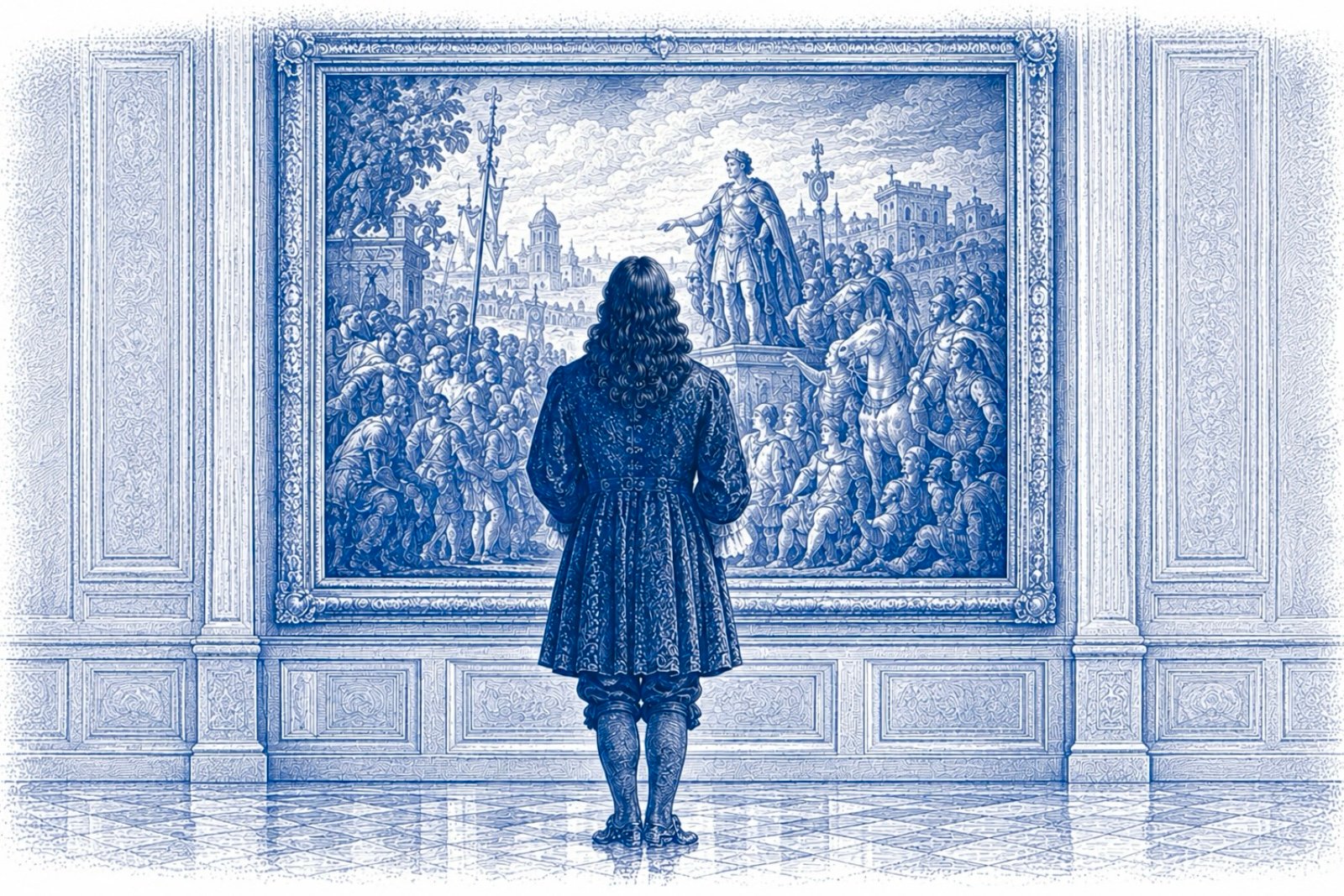
Three centuries earlier, a different royal collection crossed Europe in the opposite direction. Between 1627 and 1628, England’s Charles the First acquired, in a single purchase brokered by the merchant Daniel Nys, nearly everything the Gonzaga dukes of Mantua had spent a century collecting. The Gonzaga were selling out of plain necessity: their small duchy had been drained by war and generations of lavish spending, and a collection assembled by rulers who prized art as much for status as for pleasure had become an asset they could no longer afford simply to own. Hundreds of paintings and pieces of antique sculpture made the journey north by ship, packed into crates in Italy, and surviving records note that some of the cargo arrived damaged. The purchase gave the English crown one of the finest collections on the Continent, built in a single transaction that most dynasties would have taken generations to assemble.
The collection remained in England for only about two decades. In 1649, once the King had been executed, the new Commonwealth government catalogued everything the crown had owned and auctioned it off, partly to raise cash and partly to settle what the dead monarch had still owed. The Mantuan pictures went in every direction after that, and a good number of them still hang today in public galleries stretching from Madrid to Vienna. A buyer in Antwerp or Paris in 1650 cared only about the price in front of him. Nobody who ever owned these pictures, across three centuries of buying, selling and inheriting, was trying to build the asset that provenance eventually became.
That same slow accumulation of owners has left those pictures carrying something that did not exist when they left Mantua: a documented chain of ownership, traceable almost year by year, that reads like a condensed history of the seventeenth century and everything since. That chain performs three distinct jobs for whoever owns the picture now, well beyond sentimental decoration. It corroborates authorship more cheaply than any laboratory test. It flatters whoever owns it now, who can recite the picture’s descent like a pedigree. And it maps, for anyone willing to look closely, how exposed the owner’s legal position actually is.
Forgery is the sharper edge of the same problem. A skilled copyist can reproduce brushwork convincingly enough to fool most eyes, and modern pigment analysis catches only the clumsiest attempts. A forger cannot easily manufacture a provenance that survives scrutiny, not without also forging decades of paper: auction records, customs declarations, insurance valuations, the correspondence of dealers long dead, exhibition catalogues printed in cities that no longer exist under those names. A picture that can be traced confidently back to the Gonzaga inventory of 1627 does not need its paint tested nearly so urgently, because the chain of hands it passed through is itself a kind of evidence no pigment test can provide.
Gaps in that chain are where the discount lives. A picture can be entirely genuine and beautifully preserved and still prove difficult to sell, because an unexplained decade, particularly one landing in the 1930s or 1940s, usually signals nothing worse than an unfiled claim waiting somewhere to surface. Buyers price that open possibility, and no amount of admiration for the brushwork removes it. This was precisely the condition of the Bloch-Bauer Klimts for the better part of seven decades: magnificent, authenticated beyond doubt, and nonetheless unsellable at anything like their eventual price, because the ownership question stood open. The same arithmetic applies quietly to furniture, manuscripts, jewellery and antiquities, to anything portable enough to have been taken and durable enough to have survived.
A whole trade in reassurance has grown up around that risk. The Art Loss Register, a London database founded after a wave of thefts in the late twentieth century, exists for one plain purpose: letting a dealer or an auction house check a picture’s identifying marks against reported losses in the minutes before money changes hands. The larger auction houses now keep research departments whose only job is tracing a lot’s ownership back as far as the paper allows, because a catalogue entry with a confident provenance line sells for more than an identical picture with a shrug where that line should be. Some insurers write title policies for art much as they do for property, charging a premium precisely because establishing a clean provenance takes real work. This infrastructure did not exist when Mantua’s pictures were first dispersed. The market built it afterward, once enough pictures like the Bloch-Bauer portraits had taught it what an unexamined gap can eventually cost.
This is why dealers often examine the back of a picture before they look properly at the front. Collection stamps, inventory numbers, wax seals, old shipping labels and exhibition records form a paper spine running down the object’s whole life, and that spine carries legal risk the image itself cannot show. A painting without that spine carries an unpriced risk, and the market handles unpriced risk the way it always does: it discounts first and asks questions afterward.
Mantua sold its collection to settle debts of its own, three centuries before the Commonwealth sold off what remained of Charles the First’s collection to settle a revolution. Every owner since has bought, sold or inherited the survivors for reasons that had nothing to do with provenance, and yet each transaction added one more line to a record that no painter could have imagined would eventually be worth money in itself. Buyers now study the receipts as closely as the brushwork, aware that somewhere in an unexplained gap, another claimant might still be waiting, as Maria Altmann once did, for someone to finally produce the paperwork that proves a picture is truly theirs to sell.
Leave a thought