


THE SIXTH GREAT POWER
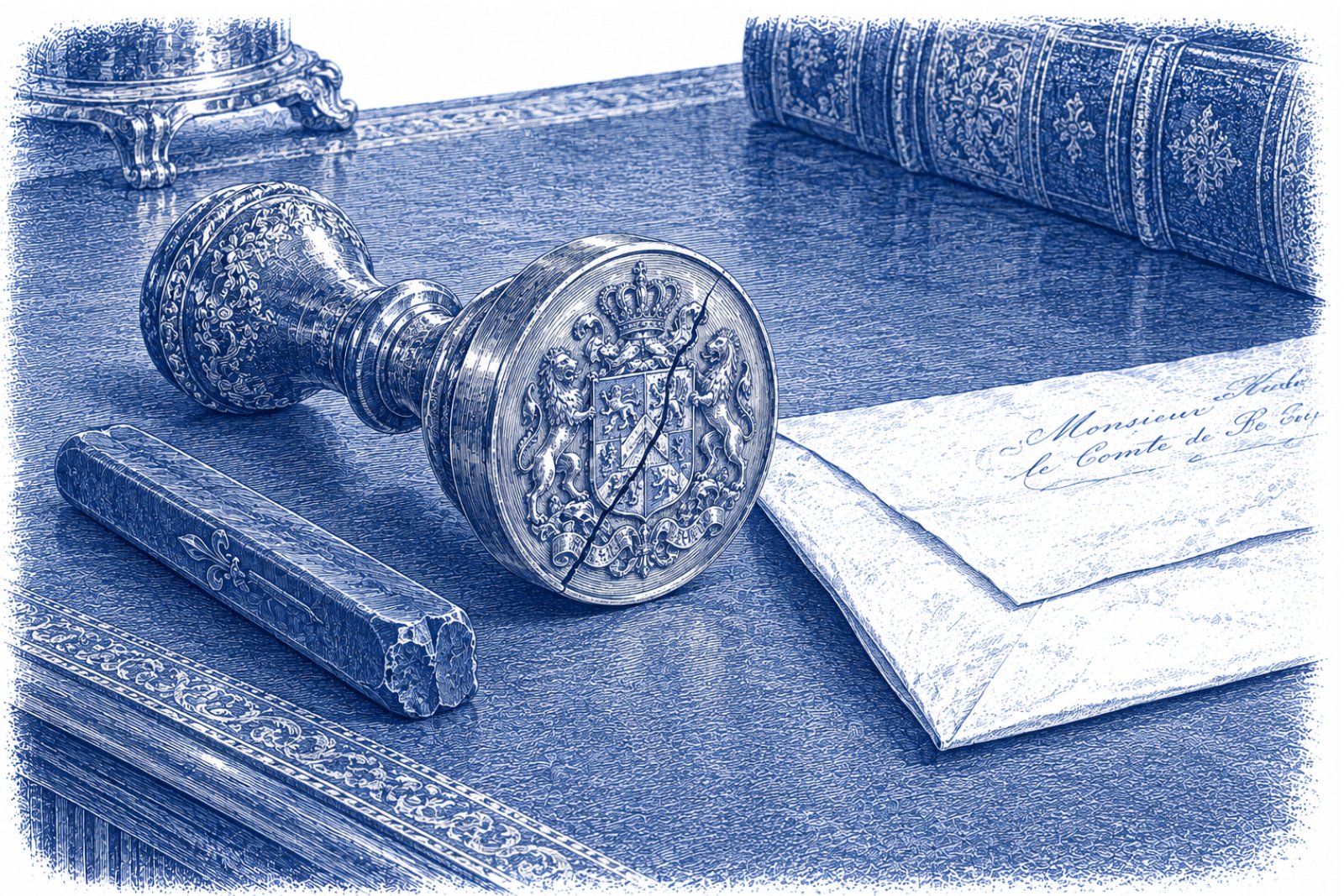
Legend dating to 1818 credits the Duc de Richelieu with counting six great powers in Europe that year: England, France, Austria, Prussia and Russia, standing alongside a single merchant house based in London, Baring Brothers. Nobody can now produce the original letter or speech with certainty, but the line was repeated often enough, by enough people who had reason to know the firm, that it survives as the accepted shorthand for what a single London merchant bank had become within living memory of its founding. No crowned head sat on the Baring board, and no Baring commanded troops, yet contemporaries used the line in earnest, as a reasonably accurate map of where financial consequence resided in Europe at the time.
Baring Brothers was, in formal terms, simply a house of merchants and financiers: it arranged credit, underwrote loans to governments, and put its name behind bills of exchange moving goods across borders faster than any ship carrying the goods themselves. Fifteen years before that story was first told, the firm had helped arrange the financing behind the United States’ purchase of the Louisiana territory, a single transaction that roughly doubled the size of a sovereign nation and ran, in large part, through a private counting house in London, with no government treasury anywhere near the centre of it. Governments themselves borrowed on Barings paper when their own standing abroad was thinner than the firm’s. That name was the entire product being sold.
Such a bill, endorsed by Barings, required no further investigation from a counterparty on the other side of an ocean, because the firm’s judgement and the firm’s capital stood behind it, and both had been tested for decades without failing. A name functioning this way behaves like collateral nobody has to appraise. Two merchants who had never met, trading in currencies neither fully controlled, could settle an enormous transaction on the strength of one London signature, and the whole apparatus of nineteenth-century trade finance depended on thousands of such settlements happening without incident, invisibly, every week.
By 1890, that apparatus came close to failing. A lending boom across Latin America had drawn every ambitious City house into underwriting government bonds for young, fast-growing, badly understood economies, and Barings had gone further into Argentina than most, confident in a market that then turned sharply against it as Argentina’s own finances buckled under debts the country could not service. The firm found itself holding bonds it could neither sell at any reasonable price nor absorb onto its own balance sheet. For a few tense weeks that contemporaries simply called the Baring Crisis, one of the City’s oldest houses stood on the edge of outright insolvency, a prospect serious enough to threaten the wider financial system that had grown comfortable assuming Barings simply could not fail. Bondholders across Europe who had never set foot in Buenos Aires or in Bishopsgate found the value of their holdings suddenly in question, a reminder that a single house’s underwriting decisions could transmit strain to investors who thought they had merely bought a safe, familiar name.
William Lidderdale, governor of the Bank of England, rallied the City’s other leading institutions into underwriting a joint rescue, rival houses that stood to gain nothing directly from saving a competitor and a great deal from preventing a collapse nobody could fully contain. The fund was large enough to cover the exposure, subscribed within days by banks that would, in any ordinary year, have been competing hard with Barings for exactly this kind of business. Even the Bank of England, whose usual concern was the stability of the whole system, treated this one firm’s survival as inseparable from it and acted accordingly. The guarantee held. Barings survived, diminished and chastened, soon afterward reorganised as a limited company after generations as a private partnership, but recognisably itself, its name still good the following Monday morning.
The City’s willingness to rescue a struggling rival in 1890 rested on a particular feature of the failure: everyone involved could see exactly what had gone wrong. A commercial misjudgement about Argentine debt was the kind of error any underwriter in the room might have made, and might yet make again, which gave every other house a stake in demonstrating that such an error need not be fatal. The problem surfaced while there was still time and still enough capital left standing to organise a rescue around it.
Just over a century later, the same name met a different kind of failure. In 1995, Nick Leeson, a trader in the firm’s Singapore office authorised to arbitrage small price differences between futures exchanges, instead built an enormous unauthorised position betting on the direction of the Japanese stock market, hiding the mounting losses for roughly three years in an account the rest of the bank barely examined and a head office on the other side of the world never thought to question closely. An earthquake in Kobe sent the market the wrong way entirely, turning a concealed loss into an unconcealable one within days. By the time anyone outside that one office understood what had happened, the losses exceeded the entire capital of a 233-year-old institution.
No consortium assembled this time, because there was no longer a solvent entity left for a consortium to rescue. Barings was sold to a Dutch bank for the nominal sum of one pound, its name kept alive afterward chiefly as a brand on other people’s balance sheets. The failure had been discovered only after it had already finished happening, which is precisely what made it unrescuable. A guarantee fund works only against a visible hole, while organising one is still possible; by the time this particular hole became visible to anyone above a single desk in Singapore, no organising remained possible at all.
Regulators responded to the collapse in the way regulators usually respond, by naming the failure mode so precisely that it became harder to repeat in exactly the same form again. Front-office trading and back-office settlement, which Leeson had controlled simultaneously from the same small office, were separated by firm rule across the industry, a matter for head office from then on, decided centrally and no longer left to any one branch manager’s own judgement. Position limits were tightened, reporting lines redrawn, and “key-person risk”, a single individual’s concealed authority to commit an institution beyond what it could survive, entered the formal vocabulary of bank risk committees as a named category with its own required measurements and limits. The lesson arrived, as such lessons generally do, a little later than the institution that might have taught it earlier would have liked.
What separated the two episodes was not simply a matter of scale. A visible, collective, explicable misjudgement, the Argentine kind, can be absorbed by a name’s accumulated trust, provided it surfaces while other parties still have reason and means to step in. A concealed, individual action, discovered only once the capital behind it is already spent, admits no such rescue, since nobody organises a guarantee fund around a danger they cannot yet see. One failure tested the name’s reputation for judgement, a quality the whole City had some stake in forgiving collectively. The other tested something the reputation had never been built to insure against: a single employee, several ranks removed from anyone likely to recognise the risk, holding enough authority to act and enough concealment to delay discovery past the point where any rescue remained mathematically possible. A diversified portfolio survives one bad position by construction. A name is held by everyone who bears it at once, undivided, which means it cannot be partly spent; whatever happens to it happens to all of it, wherever in the firm the spending occurred.
An heir to the Baring name received, across six generations, every advantage that name could confer: easier credit, readier introductions, a presumption of competence extended before any personal achievement had earned it. Several hereditary titles accumulated around the family along the way, each one a fresh draw on the same underlying account, each one adding to a single concentrated exposure that no amount of family growth ever thinned out. None of those heirs personally endorsed the bills that built the reputation in the first place, and in 1995 none of them personally lost it either. A junior employee most of the family would never meet, working for a subsidiary most of the family had probably never visited, spent, in a matter of months, an inheritance that had taken six generations to accumulate, and every person still carrying the name afterward answered for a transaction they had no part in and no chance to prevent. Strangers reading about the collapse in a newspaper drew no distinction between the family and the desk in Singapore; the name was the only unit anyone outside the firm had ever been given to judge.
A fortune can be divided among heirs precisely to limit what any single one of them stands to lose. A name resists that kind of division. It is held whole by everyone who carries it, and it can be spent whole by any one of them, whether or not the rest were ever consulted.
Leave a thought