


A THOUSAND DOLLARS FOR 1923
In the years after 2008 a second-hand copy of a history of the German hyperinflation was said to fetch as much as a thousand dollars. The book was When Money Dies, by the British writer Adam Fergusson, published in 1975 as prices in Britain climbed through the 1970s. For years it sat largely unread.
Then central banks started buying bonds on a scale never seen, and financiers made a cult of the book, as the International Monetary Fund’s Finance and Development magazine noted in 2011, in a review by the Berlin economist Jürgen Kromphardt. A rumour went round that Warren Buffett had recommended it to a Dutch financier. The magazine leaves open whether the rumour is true, which did the price no harm.
The buyers wanted the room where it ended. On 12 November 1923 Chancellor Gustav Stresemann made Hjalmar Schacht currency commissioner of the German Reich, and the new man installed himself in a small, dim office in Berlin that smelled of old floor cloths. His secretary gave the detail to Fergusson: Schacht read no letters and wrote none. He sat, he smoked, he telephoned. It is a thin inventory for the room from which a famous rescue was directed, and the rescue had been prepared elsewhere, by other people, in the weeks before he arrived.
Outside, employers had moved from weekly wages to daily ones, and then to paying in the lunch break, so that workers could reach the shops before the afternoon, and the pay went home in sacks and on handcarts. A man named Erich Austilat traded his Iron Cross for eighty grams of liverwurst, a birthday present for a woman called Frida, who worked at the Reichsdruckerei, where the banknotes were printed. In the household of the writer Sebastian Haffner the father, a senior civil servant, was paid once a month. On the first he settled the rent and the transport pass, went to the wholesale market at dawn, bought a month of food and carried it home by taxi, because nothing he earned later in the month would buy as much.
Cafés fared no better. A student at Freiburg ordered a cup of coffee that the menu put at 5,000 marks, drank it, and was handed a bill for 14,000, whereupon the waiter advised him that anyone who wanted two cups should order them at the same time. The purse had given way to the suitcase, and not even the beggars would take cash. Visitors with foreign money lived like kings on the Spree, and had no need of the advice.
Frida’s employer, the Reichsdruckerei, had by the autumn farmed its work out to as many as 133 outside firms, whose presses ran by day and by night, and still they could not keep up. Some of the notes went out printed on one side only.
A loaf of bread cost about 160 marks at the end of 1922 and about 200 billion in November 1923. An egg for breakfast went from 800 marks in June to 320 billion by the end of the year.
Savers watched a lifetime of thrift fall away, and the small pensioners and the disabled veterans stood among the worst hit. The father of Walter Levy, later an oil consultant in New York, was a lawyer who had paid faithfully every month, from 1903, into a twenty-year insurance policy; when it fell due he cashed it in and bought a single loaf of bread. Borrowers, meanwhile, repaid their loans in money that bought nothing.
Afterwards came the new money, and the egg cost 32 pfennigs.
Stresemann had ended the resistance in the Ruhr in September, the Rentenbank had been founded by decree in October, and 400,000 public employees, a quarter of the payroll, had lost their posts, so the ground was clear. On 15 November the Rentenmark appeared, exchangeable for one trillion paper marks and pegged to the old gold parity, backed in fact by mortgaged land, a plan to measure it in rye having been rejected on the ground that rye was itself priced in collapsing paper. The same day the Reichsbank stopped discounting government debt, which shut the channel through which the state had been paying its bills with freshly printed money. Five days later Reichsbank president Rudolf Havenstein, who had presided over the printing, died suddenly of heart failure, and on that day Schacht fixed the rate at 4.20 Rentenmark to the dollar, the rate of the years before the war. The new money was kept scarce, and the scarcity did much of the persuading: the farmers, who had refused to sell for marks, regained their confidence, and the food shops began to restock in December.
Frau Barten, of East Prussia, remembered the feeling of having a single Rentenmark to spend, and she spent it on a small tin bread bin; to buy something with a price tag of one mark, she said, was thrilling. The old paper took longer to leave. By the end the earliest inflation notes were worth more as paper than at their face value, people overprinted them as admission tickets, membership cards and receipts, and some stayed in circulation until the middle of 1924.
Somebody paid for the miracle.
Unemployment rose from 6.3 per cent in August to 28.2 per cent in December, anyone who still held financial assets in marks lost them in the reform, and the state’s wartime debt of 154 billion marks shrank to about fifteen pfennigs. Schacht became president of the Reichsbank that month, later served Hitler as economics minister, and was acquitted at Nuremberg.
Stabilisation took weeks. The memory of the episode has taken the better part of a century, and it is still running. By 2010 an American publisher had issued a paperback of Fergusson’s book at $14.95, and the thousand dollars and the $14.95 bought the same pages, and anxiety made up the difference.
Kromphardt himself was cooler than his book’s buyers. He praised the first-hand testimony, among it the account of a couple who lost their savings and took their own lives, and called the book a striking chronicle of little use for drawing conclusions about the present, since it offers no theory of when printing money becomes hyperinflation. A reprint ended the scarcity. Whether it ended the anxiety the review does not say.
Economists have found the same anxiety in ordinary households. Ulrike Malmendier and Stefan Nagel studied 57 years of survey data from the University of Michigan and found that people weight the inflation they have personally lived through more heavily than the inflation they have only read about. A saver who learned from a grandparent that cash can vanish may prefer real assets for decades after the reason has gone. The authors call it learning from experience.
Germans have a word for it, Inflationstrauma, and the Bundesbank, founded in 1957 after two currency collapses, inherited the mood along with a mandate that later served as the model for the European Central Bank.
Three researchers at the Hertie School in Berlin, Lukas Haffert, Nils Redeker and Tobias Rommel, asked what Germans remember of the years that followed, and published their answer in Economics and Politics in 2021. Many Germans fold the hyperinflation of 1923 and the Depression of the early 1930s into a single crisis in which prices rose and factories closed together. The record has prices falling from 1930 to 1932 while unemployment climbed. In the survey, about one German in twenty-five knew that the Depression had been a time of deflation. The mistake was commoner among the better educated, an awkward result for anyone who expects schooling to cure it.
Brüning, the Chancellor of those years, governed by decree and met the slump with austerity. Baskets of banknotes make a picture, whereas a sound currency beside a closed factory makes a poorer one, and memory seems to keep the pictures.
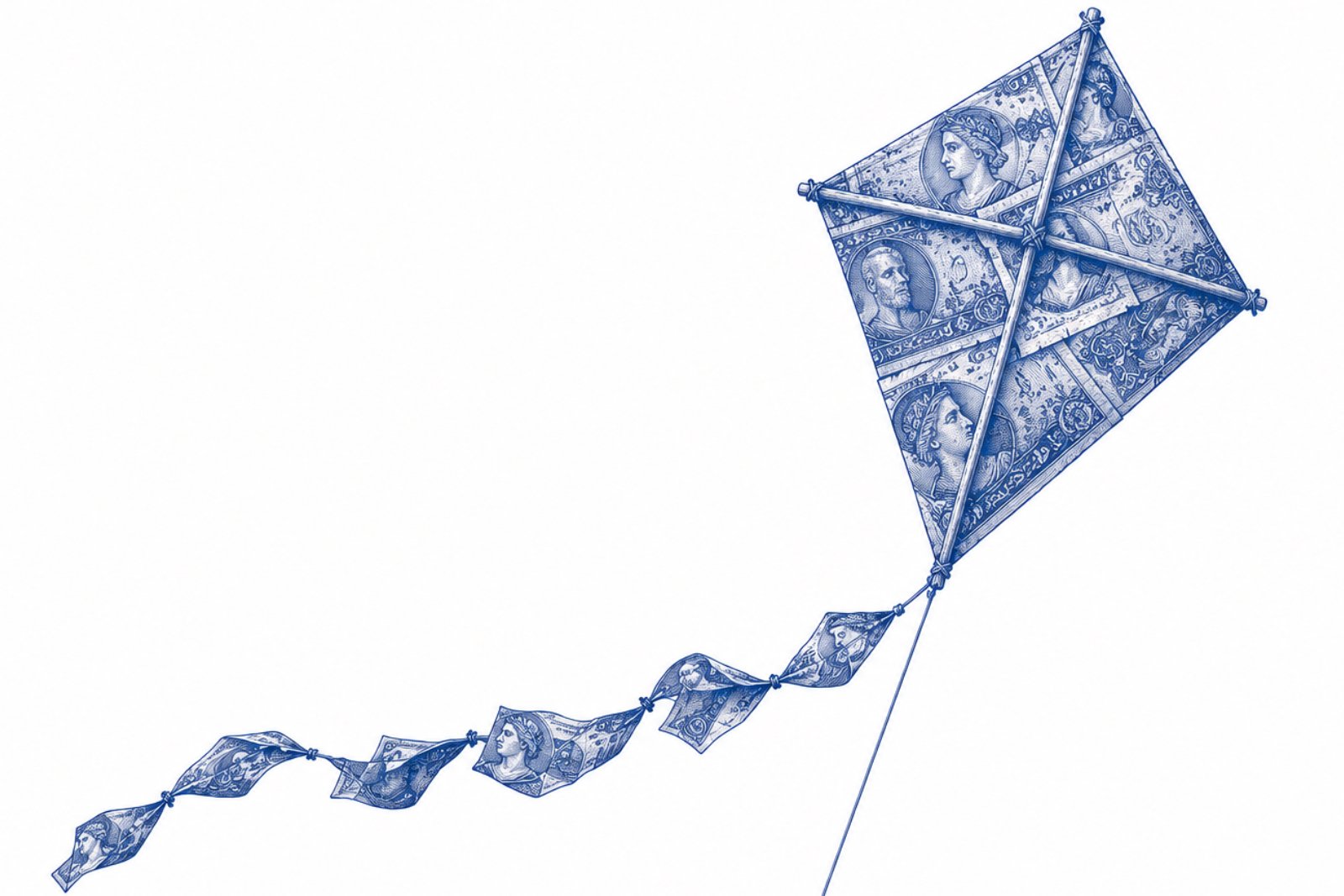
Photographs of the period are easy to find: children play with bundles of notes, and one shows boys flying a kite made of them.
Many learned the lesson thoroughly and filed it under the wrong decade.
Leave a thought